LECTURES & WORKSHOPS
____
Matriarchy for Future – Festival
July 1 – 4, 2027
Kasteel de Berckt, bei Venlo NL
40 km von Duisburg
Let us celebrate, dance, laugh, exchange and develop visions
Find out more about the speakers and the offers
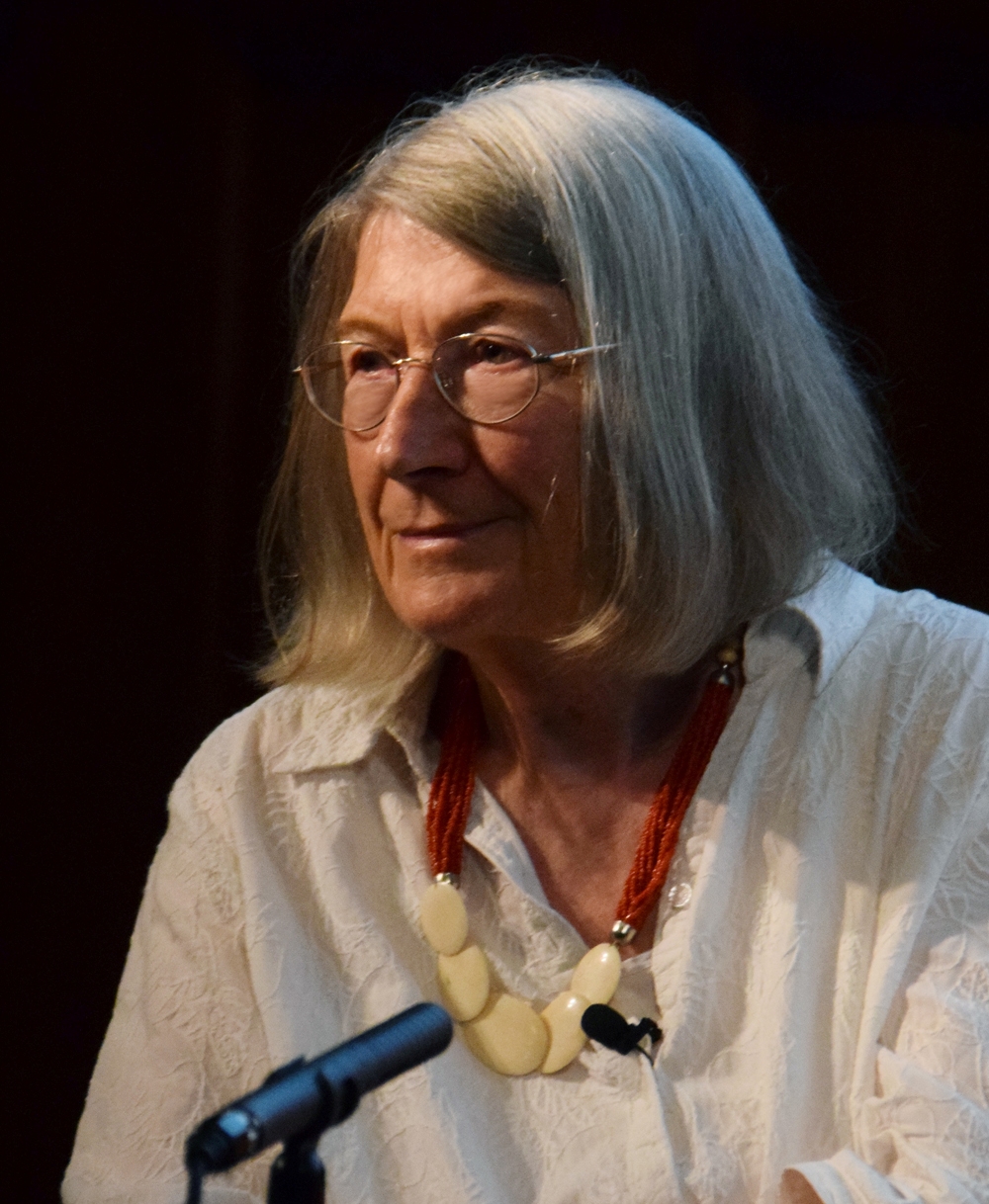
Dr. Heide Goettner Abendroth – Academy HAGIA
Matriarchal researcher Heide Goettner-Abendroth will give an introductory lecture at the festival and shed light on the potential of matriarchal values for the future of our planet.
(This post will be updated)
Read more ...
Dr Heide Goettner-Abendroth (*1941) taught philosophy and theory of science at the University of Munich. Co-founder of women’s studies from 1976. Through her lifelong research work and her series «Das Matriarchat» (Kohlhammer-Verlag), she became the founder of modern matriarchal research.
Since 1986 she has founded and directed the “International Academy HAGIA”. Lecturer at various universities, visiting professor in Montreal and Innsbruck. Lectures and tours at home and abroad. She has chaired three world congresses for matriarchal research in Europe and the USA. In 2005 she was nominated for the Nobel Peace Prize by a Swiss organisation and in 2007 by a Finnish initiative.
Matriarchal politics and the vision of a new society
Matriarchal politics is based on modern matriarchal research and its aim is to create an egalitarian, peaceful society. How this can be achieved is shown to us by living matriarchal societies whose traditions go back centuries/ millennia.
Their economy, politics, social organisation and spirituality show extremely interesting patterns of how societies can be created and maintained without violence and based on balance and reciprocity. This applies to the microstructures of family, clan and village as well as to the macrostructure of city, region and interconnection of regions.
My lecture will explain how this rich treasure of human experience can be utilised today for the development of a new society without violence and wars.
Panel discussions
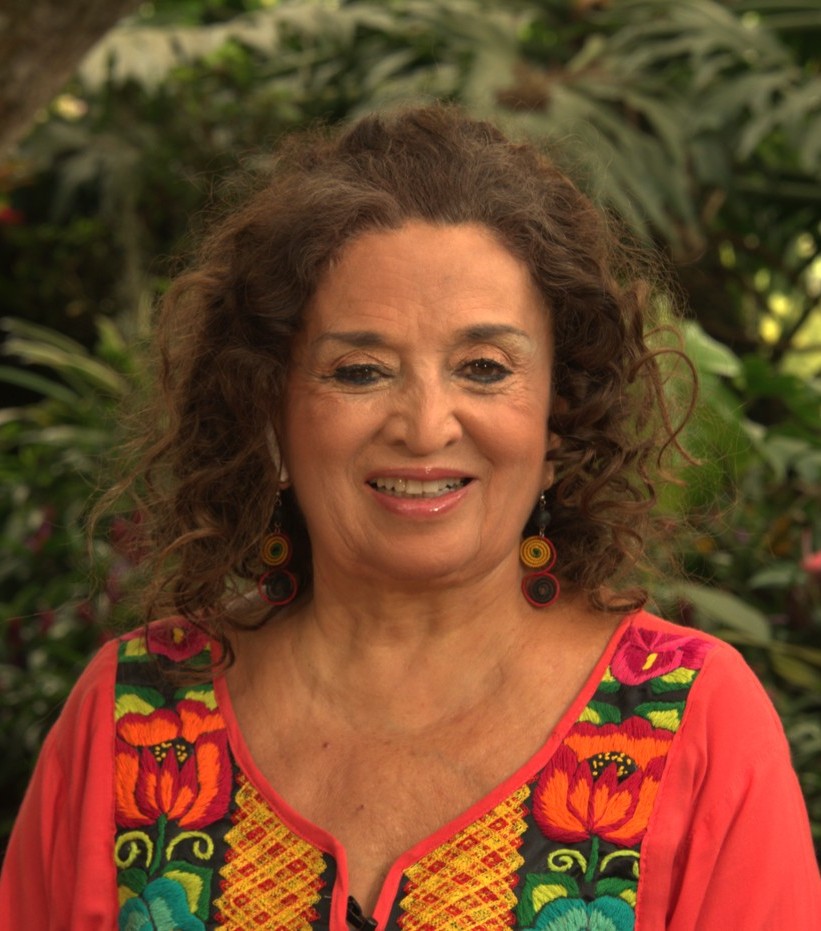
Nashira EcoVillage Colombia – Panel discussion
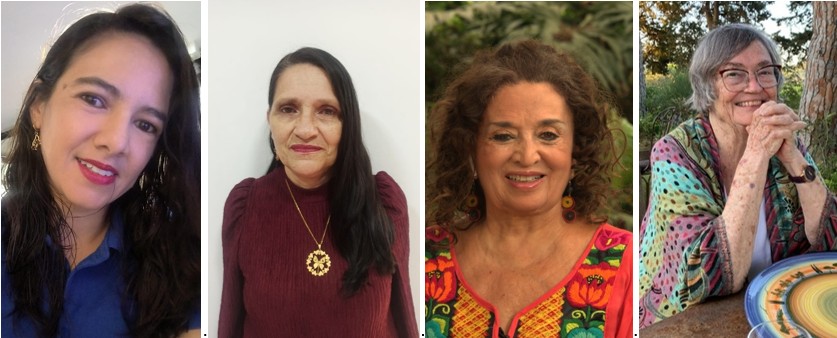
Angela Dolmetsch, Margarita Duque, Yazmin Martinez and Genevieve Vaughan. Nashira is far more than a place to live, it is a dream come true. Comprising 88 homes built by and for women.
Read more ...
About us
The Nashira eco-village was started in 2003 when 88 women heads of family displaced by the Colombian conflict were given a 30.000-meter farm as part of the gift economy, where resources should go where they are needed, for them to build a sustainable eco-village. The building materials and the technical expertise was financed by the government, but the women had to put 1000 hours of work. The ownership of the houses is in their name, so that they can decide whom they allow in their houses and in their bodies. The governance of the eco-village is in the hands of a women’s only board. In 23 years, the families of the Nashira ecovillage have come out of extreme poverty and become middle class. Children grown up in Nashira are now professionals or college students, while the women have acquired different expertise, recently 14 women became technicians in solar energy after a nine month theoretically practical course. In 1925 A She Ede Diplomat took place in Nashira where 30 women from 10 countries learnt how to make a sustainable matriarchal ecovillage, becoming Nashira also a place of study.
Matriarchy and gift economy in the Nashira eco-village in Colombia
Nashira is far more than a place to live, it is a dream come true. Comprising 88 homes built by and for women, it stands as the fruit of the gift economy. Here, more than 350 people live together in harmony within a regenerative, egalitarian, women-led community, where solidarity and care prevail. Its model of governance, inspired by sociocracy, ensures the active participation of all. A thriving circular economy is powered by solar energy and sustained through more than 38 productive initiatives, ranging from sustainable agriculture – with its flagship product, Moringa – to recycling, pottery, a solar-powered restaurant, Lucy’s bakery, an agrivoltaic nursery, and a salsa school for children and young people, among many others. Nashira, heir to the ancestral Malagana or Kansateura culture, is a living matriarchy: a laboratory of the future where life flourishes, the land regenerates, and women lead with wisdom.
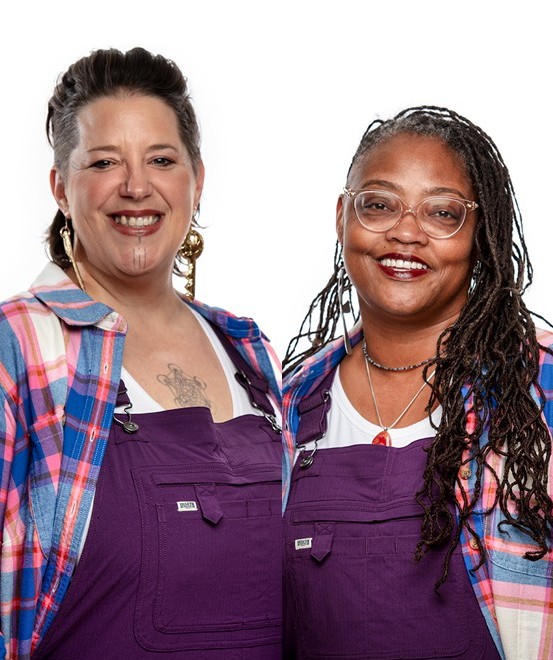
Motherful – Heidi Howes and Lisa Woodward
For seven years, a collective of single mothers in Columbus, Ohio has been quietly building something the world has not seen before: a self-titled Matriarchal Organization.
Read more ...
About us
Heidi Howes and Lisa Woodward are both mothers, artists, community organizers, and the Co-Founders and Co-Directors of Motherful International. Motherful was founded in Columbus, Ohio, USA and is a collective of matriarchs building power in order to transform the world within a global matriarchy now movement
When the Mothers Lead: Building a Motherful World and Organizing the Global Mothers’ Revolution
This 90-minute session is both a story and an invitation. Heidi Howes and Lisa Woodward, co-founders of Motherful, will share how 2000+ mother-led families came together around five core pillars — Practicing Egalitarianism, Consensus-Based Decision Making, Maternal Gift Economy, Peace with Mother Earth, and Mother and Child Centered Policies — and turned them into a living, breathing organization with chapters now rooted in Colombia and forming in Atlanta. This is the story of what happens when mothers stop asking for a seat at the table and build their own table instead.
Grounded in Heide Göttner-Abendroth’s five-dimensional matriarchal framework, Motherful is being offered as a North American proof of concept within the growing Matriarchy Now coalition — evidence that matriarchal principles are not relics of the past but blueprints for the future. This session will walk through what that looks like in practice: sociocratic consent rounds instead of top-down votes, a gift economy that circulates resources instead of hoarding them, and a commitment to rematriation that is about to take physical form with the closing on Motherful Village — 2.35 acres of land moving toward a community land trust, with a 2027 Land Back campaign already underway.
The heart of this presentation is the distinction between uplifting the matriarchy and smashing the patriarchy — between building power with each other rather than fighting for power over each other. Attendees will leave understanding the practical architecture of a maternal gift economy, what it actually takes to replicate a Circle into a Chapter into a Village, and why mother-centered governance produces different outcomes than the systems we’ve inherited.
This is not a theory talk. The session will be structured in three movements: first, the origin story and the five pillars as lived practice; second, a guided experience of consensus-based decision making, so the room feels the difference between being heard and being counted; and third, an open call to action — concrete ways for organizers, mothers, and allies in every country to begin building their own Motherful nodes within the Global Mothers’ Revolution.
This presentation also marks a milestone in a larger project: the seed of a global declaration and book, The Global Mothers’ Revolution — Taking Form, which positions Motherful as one proof point among many in a worldwide 2
rematriation movement. Venlo audiences will be among the first to hear this framework named publicly as a global call.
By the end of 90 minutes, the room will not just understand Motherful — they will have practiced it.
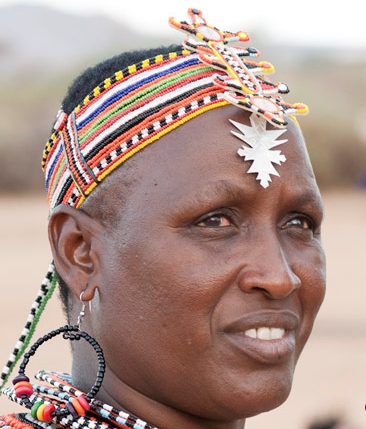
Umoja Women's Village in Kenya – Interview with Rebecca Lolosoli, Founder and Matriarch
«Umoja» means «unity». The village of Umoja, in the heart of the Samburu region of Kenya, was founded in 1990 by Rebecca Lolosoli as Africa’s first women’s village and continues to offer its residents and their children protection from violence and oppression. (This article will be updated)
Read more ...
Rebecca Lolosoli – an African heroine!
Women’s rights activist, founder and matriarch of the Umoja Women’s Village in Kenya.
«Umoja» means «unity». Founded in 1990 by Rebecca Lolosoli, the Umoja village in the heart of the Samburu region of Kenya was the first women’s village in Africa and continues to provide its residents and their children with protection from violence and oppression.
In 2023, the film «Umoja – Where Only Women Say It» was broadcast on Arte. It depicts life in the women’s village as a refuge from forced marriage, male violence, and female genital mutilation, and focuses on the sponsorship program for the education of girls, including those from surrounding villages in the Samburu tribal region of Kenya. Rebecca Lolosoli’s biography, «Mama Mutig» (Mother Courage), was published in 2016.

Umoja women with village founder Rebecca Lolosoli (third from left)
Social order – Connected instead of lost
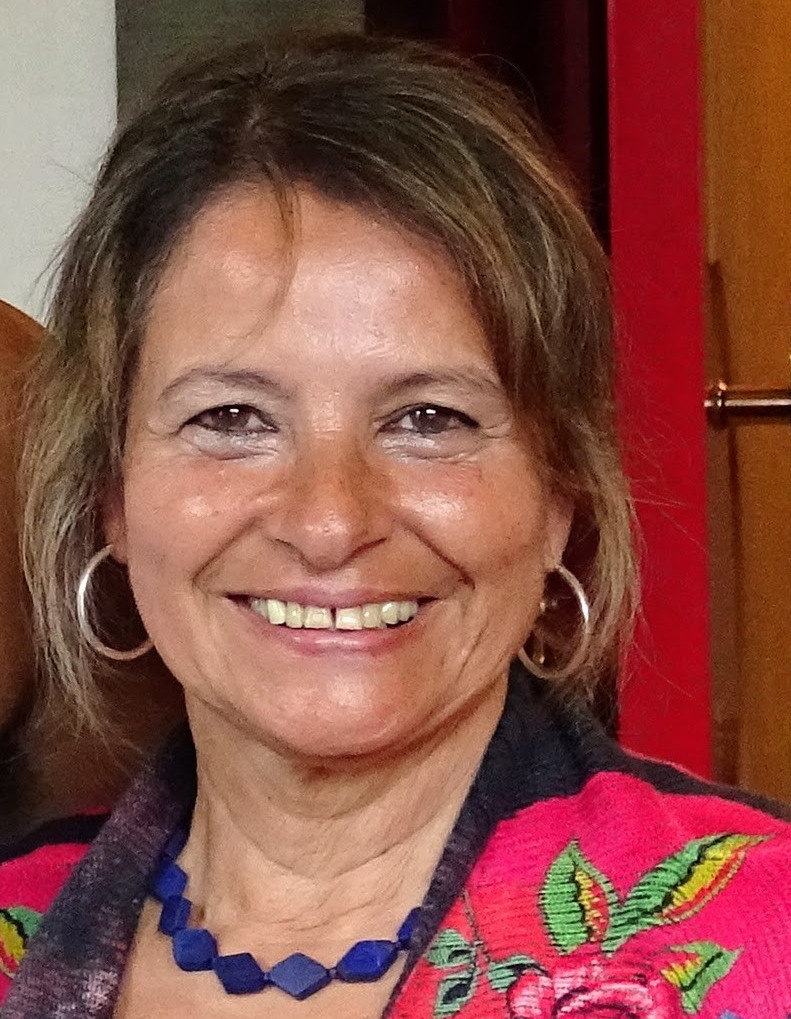
Francesca Rosati Freeman – Matriarchal Seeds
An experiential circle for recognizing and reactivating the maternal principle. Through my works I continue to spread the values of matriarchal cultures as a path to harmony, freedom and mutual respect.
Read more ...
Francesca Rosati Freeman
During my numerous travels, I have explored alternative cultures and lifestyles. My encounter with the matriarchal society of the Mosuo has inspired much of my work: books and documentaries. The latest: Return to the Mother Lake is from 2025. Through my works I continue to spread the values of matriarchal cultures as a path to harmony, freedom and mutual respect.
Matriarchal Seeds. An experiential circle for recognizing and reactivating the maternal principle
Through the image of a tree and its main branches representing Care, Belonging, Relationships, and Spirituality, we will explore memory to bring to light unrecognized matriarchal practices experienced in patriarchal contexts. Drawing on my experience with the Mosuo people, I will facilitate a circle to recognize and reactivate these practices in everyday life, transforming individual memory into shared awareness: knowledge to be transmitted and allowed to flourish in the relationships and communities of tomorrow.

Gabriele Kapp – Relationships with a future
Stone Age skills for the modern family? Stone Age skills for the modern family!
Read more ...
Gabriele Kapp is a speaker on modern matriarchy research, has been a naturopath in her own practice since 1996 and has been a lecturer for over 20 years, 4 children.
- Ambassador #worldf®amilynetwork
- Modern Family Coach, Therapist
- Sustainable violence prevention for groups and organizations
Modern family between gender jungle and climate crisis – chaos or opportunity?
In this workshop we dare to address the pink elephants of our society, which hardly anyone even dares to think about, and ride them!
After the keynote speech with questions and answers, we will develop exciting visions for «the time after …»
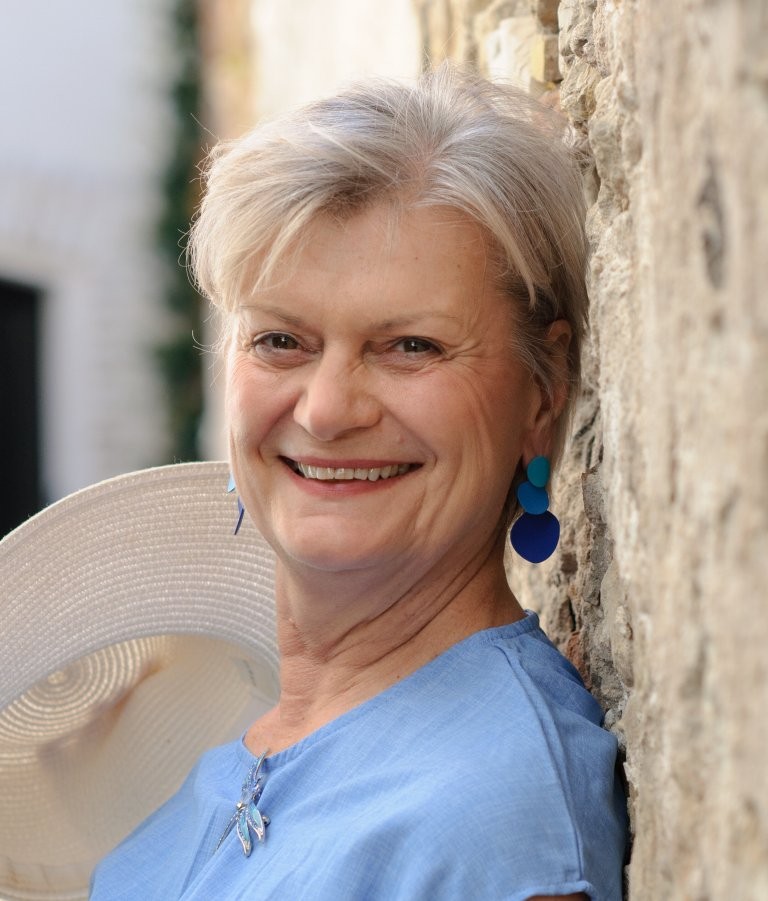
Iris Baumann – Li Shalima's needs plate
What do we humans really need? And what are we actually arguing about – needs or the ways to fulfill them?
Read more ...
Iris Baumann
I am Iris Baumann – a teacher, long-time school principal, lecturer on matriarchal knowledge, speaker, and senior model. For many years, I have been exploring how people grow together in appreciative relationships and vibrant communities.
Li Shalima’s Needs Plate has captivated me from the very beginning. It makes visible what lies beneath our feelings, conflicts, and decisions, and opens new paths to clarity, mutual understanding, and genuine connection. I recognize this as a core quality of matriarchal culture: perceiving people’s needs, taking responsibility for one another, and consciously shaping community.
In my workshop, I combine sound knowledge with practical exercises, humor, and personal experience. I envision spaces where we not only talk about matriarchal values but also experience them together. Because I am convinced: A culture of togetherness begins where we learn to recognize the needs behind the stories.
The Needs Plate. A Compass for Connection and Lived Community
In this interactive workshop, you will learn about the Needs Chart developed by Li Shalima – a fascinating tool that helps distinguish authentic needs from desires, values, and strategies. This opens up new perspectives on communication, relationships, and community. The Needs Chart was developed as a practical aid for cultivating an appreciative, needs-based way of life and is rooted in matriarchal values such as connectedness, balance, mutual care, and peaceful conflict resolution.
Through practical exercises and shared reflection, you will experience how a deeper understanding of your own needs can lead to greater clarity, empathy, and vibrant interaction. This workshop is for anyone who wants to not only understand matriarchal culture but also experience it in their own life.
Jennifer Eva Sirel-Pillau – Council for the Revival of Matriarchal Arts (CRMA)
An initiative to revive the hearth, traditional arts, and matriarchal values at the heart of our homes and communities.
Read more ...
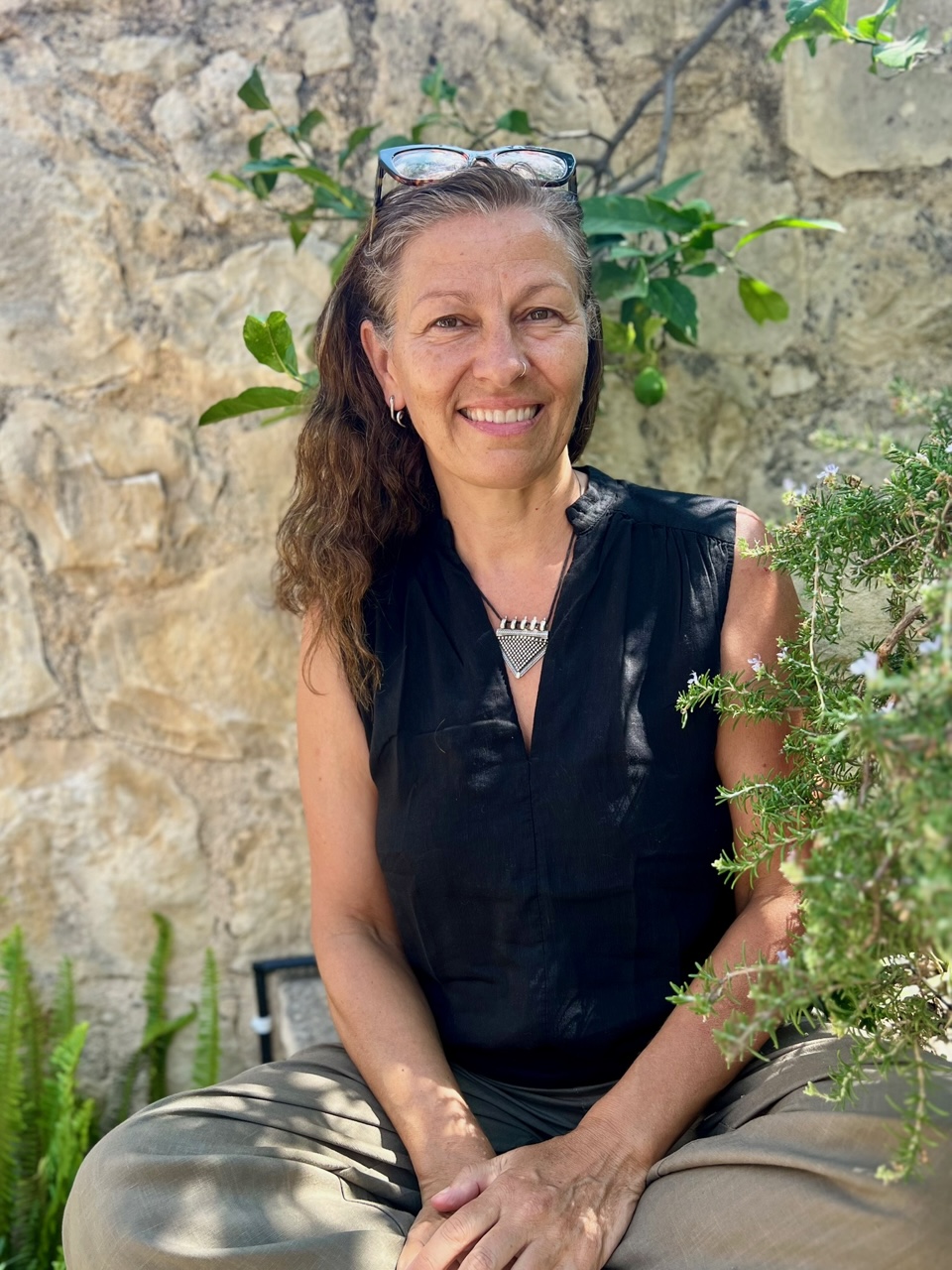
Jennifer Eva Sirel-Pillau, mother of two, is a founding member of the Council for the Revival of Matriarchal Arts. Jennifer holds a master’s degree in Traditional Chinese Medicine, as well as certifications in Ayurvedic Practice and Craniosacral Therapy. She studied matriarchal theory at International Academy HAGIA.
Beginning Again: The Art of Becoming Matriarchal Women
The Council for the Revival of Matriarchal Arts (CRMA) is an initiative to revive the hearth, traditional arts, and matriarchal values at the heart of our homes and communities. We will offer a short presentation on the mission and activities of the council. Attendees will be invited to engage in one of our foundational gathering formats, the Women’s Wisdom Circle. An instructional guide and curated list of resources for starting local Wisdom Circles will be offered to participants.
Malika Grasshoff – The magical writing of women in ancient Kabylia
The Kabyle women are not only the creators of human life, but the creative force of family, society, and life itself.
Read more ...
Malika Grasshoff
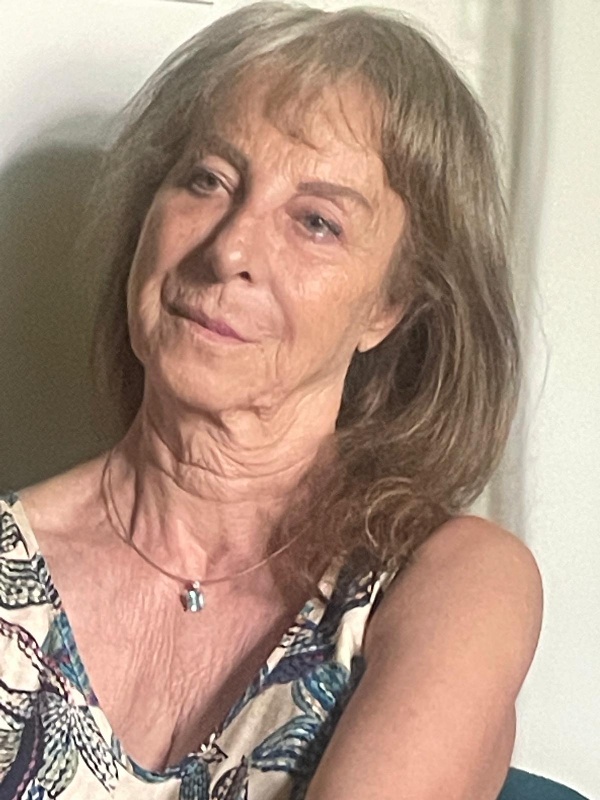
As a young woman, I left Kabylia, a Berber-populated region in the mountains of Algeria, in 1965 to study the history of the “Other” in Europe. There, I encountered a Eurocentric, often colonialist, distorted view of my culture, and especially that of its women. Therefore, in 1978, I began the academic exploration of my past in Bremen. From the outset, I did not consider this research a private matter, and after extensive research, I was able to present the history of the women of traditional, non-literate Kabylia and decipher the meaning of their secret magical script.
My dissertation on the magic of Kabyle women has been published as two books under the pseudonym MAKILAM in French, German, and English.
I have since published two books based on my dissertation on the magic of Kabyle women under the pseudonym MAKILAM.
The Magical Script of Women in Ancient Kabylia (Berber Region of Northern Algeria)
Kabyle women are traditionally regarded not only as creators of human life, but as the creative force of family, society, and life itself. Since they did not use linear writing as we know it, they developed an art form using drawings, accessible only to women—a secret language that they reproduced in their work: pottery, weaving, and mural painting. These graphic symbols have been the subject of numerous interpretations since the beginning of the 20th century, but these interpretations failed to uncover their profound meaning and remained purely theoretical and abstract. Unfortunately, the French interpreted these symbols as merely symbolic, rather than as a concrete representation of the power of motherhood. This distorted the image of Kabyle women and obscured their central role.

Renate Fuchs-Haberl – Eroticism as a sacred force
Matriarchal perspectives on love, sexuality, and connection.
Read more ...
Renate Fuchs
Speaker for Modern Matriarchal Studies at the International Academy HAGIA, Landscape Mythologist, Ritual Woman, Author
Eroticism as a Sacred Force: Matriarchal Perspectives on Love, Sexuality, and Connection
Eroticism and sexuality are not only personal experiences but are always also shaped by society. This lecture takes a critical look at patriarchy and how social structures shape desire, relationships, and gender relations. At the same time, it provides insights into the significance of the social, economic, and cultural foundations of matriarchal societies for eroticism and sexuality, and how eroticism can thus be experienced as a connecting, community-building, and life-affirming force.
Politics – Deciding for Life

Dr. Andrea Fleckinger – MatriForum and Akademie HAGIA
Basic presentation on the topic of matriarchy – a term that is associated with many emotions. Be it joy, interest and curiosity or fear, rejection and mistrust.
(This post will be updated)
Read more ...
Dr Andrea Fleckinger is the mother of two children and lives in South Tyrol, Italy. She is a consultant for modern matriarchal research and a lecturer at the international academy HAGIA (www.hagia.de). Trained as a social worker and social scientist, she teaches and researches at the University of Trento (I). Her research interests lie in women’s and gender studies, gender-specific violence against women, motherhood and care. As a feminist and activist, Dr Fleckinger combines social criticism with the findings of modern matriarchal research. She is a co-founder of the MatriForum (www.matriforum.com).
Matriarchy – An introduction
MATRIARCHY. A term that is associated with many emotions. Be it joy, interest and curiosity or fear, rejection and mistrust. Regardless of the type of emotion that the term evokes in us, we can recognise that it has great inherent power. At the same time, this high emotionality fosters the emergence of a number of misconceptions, myths and curious interpretations that have little to do with the context of life in egalitarian societies and are mostly due to a lack of knowledge.
In her contribution, Dr Andrea Fleckinger will present the structure of matriarchal societies. Based on the structural definition of matriarchal societies developed by Dr Heide Göttner-Abendroth, she offers all newcomers to the topic the opportunity to familiarise themselves with the basic features of matriarchal societies. The following questions are addressed:
-
- What is a matriarchal society and why does a matriarchy have nothing to do with female domination?
- What are the prerequisites for an egalitarian society that recognises neither gender nor generational asymmetries?
- How do the economic system, politics and the social order influence each other and why should the spiritual dimension not be ignored?
Anna Pixner – Matriarchal communication
I hear myself. I hear you. I hear life. What if communication was more than words?
Read more ...
Anna Pixner, Dipl.-Ing.
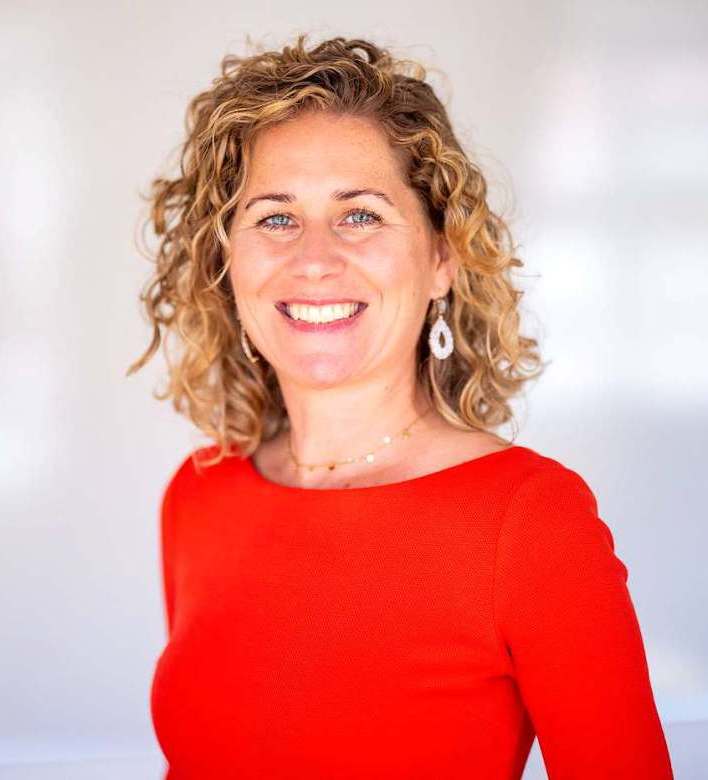
born in Austria, lives in Upper Austria. She is a co-founder and board member of the MatriForum Foundation and a speaker on modern matriarchal studies.
She studied production and management and has many years of experience as a project manager in the production and logistics sector. She is a passionate educator, trainer, and coach in vocational training for young people. Her other core concerns are the equality and empowerment of women and girls, and supporting them on their journey to self-discovery and their roots.
What if communication were more than just words?
In matriarchal cultures, communication means far more than the exchange between two people. It is a lived relationship—with ourselves, with other people, with the community, with nature, with our ancestors, and with the great web of life. It arises where we listen with open hearts, speak honestly, and give silence as much space as words.
In this workshop, we will embark on a journey through three levels of communication:
I hear myself.
The connection to our inner strength and wisdom.
I hear you.
The art of truly listening to one another and connecting authentically.
I hear life.
The experience of being part of a vibrant network of relationships—with the community, with nature, and with that which is greater than ourselves.
Brief insights from matriarchal cultural research are combined with simple, mindful exercises that invite you to experience and experiment. Together, we explore what attitudes foster connecting communication and what habits—such as judgments, comparisons, interpretations, or gossip—can hinder it.
This workshop invites you to discover communication not as a technique, but as a path of encounter—with yourself, with others, and with life.
No prior knowledge is required—only the willingness to listen openly and embrace new experiences.

Claudio Harder – Organizing Matriarchally / Power / Impulses for Men
Organizing in matriarchal and post-patriarchal ways, power in organizations, and impulses for men: Are there ways to be a man who is at peace with himself?
Read more ...
Claudio Harder, organizational developer, coach, process facilitator, grandfather. Founder and managing director of social enterprises. He is committed to healing the consequences of patriarchy and promoting matriarchal knowledge and awareness. He is fascinated by cooperative, empathetic, and life-affirming collaboration.
Book presentation: Matriarchal & Postpatriarchal Organizing
What characterizes matriarchal organizing? How are fundamental attitudes and approaches manifested? How and where are steps in this direction possible in our own environments today? How can our own concerns and projects be addressed accordingly? How can we shape cultural change? Exchange and discussion on potential implementation.
Workshop “Power” in Organizations
What is power, and how do we experience it? How can we optimally shape our role in organizations to achieve equality and effect change toward matriarchal values? What is my current power dynamic?
Workshop including an introduction to the Power Balance model with eight power aspects, key questions, and an exercise to identify your own power type.
Exchange on implementation issues.
Men – Ways Out of Discomfort
Many men today feel uneasy, caught between societal role expectations, pressure to conform, and their own ethical aspirations.
We know what we want to move away from, but rarely where we want to go, and what suitable paths might look like. There’s a lack of shared visions of a life-affirming future for men. What can I contribute? Are there ways to be a man who is at peace with himself – and also accepted by others? This is a discussion about the steps involved in exploring and discovering these paths, followed by joint reflection.
Ecology – Feeling with the Earth
Maren Kürzer – Permakultur Institut e.V.
Permaculture – what is it actually? Much more than gardening! Together we will discover the ethics and design principles of permaculture.
Read more ...
Maren Kürzer
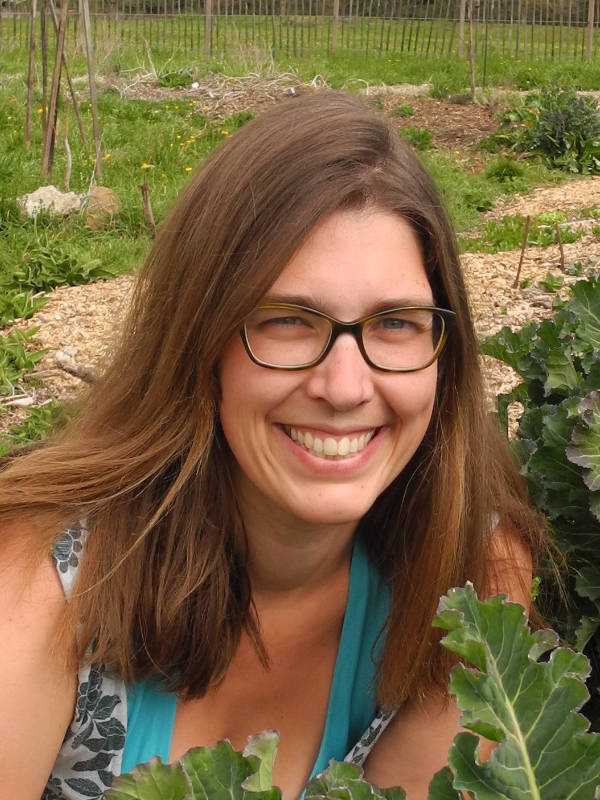
I am a permaculture designer and active in the Permaculture Institute e.V. as a board member and in the continuing education program for permaculture designers. I am involved in an alternative school founding initiative and serve as a deputy mayor in my town, and I am a mother of two wonderful children.
Introduction to Permaculture
Permaculture – what is it, exactly? Much more than gardening! Together, we will discover the ethics and design principles of permaculture and explore how it inspires us to cultivate vibrant relationships with the earth, people, and ourselves. An interactive introduction full of exchange, “aha!” moments, and a passion for a regenerative, sustainable future.

Nergiz de Beare – Communicating Matriarchy in the Digital Age
When I graduated from university, I felt a growing sense that the adults had failed. The Earth was burning, and patriarchy was the problem.
Mehr lesen ...
Nergiz de Beare
I understand how to communicate matriarchy to a modern audience, and online culture has shifted because of my work. We need to get the word out about matriarchy.
Everyone attending this festival has different wisdom to share. I’d like to share mine with you, so you can share yours with the world.
Communicating Matriarchy in the Digital Age
When I graduated from university, I felt a growing sense that the adults had failed. I started a page called Chicks for Climate that resonated with a generation, communicating age-old ecofeminist concepts to a modern audience. The Earth was burning, and patriarchy was the problem. The page concept has evolved along with me, becoming From a Young Matriarch today. I would like to share the lessons I’ve learned along the way, as well as the vision of 1 Million Matriarchies I have for our society today.
Susanne Fischer-Rizzi – The Alchemy of the Great Mother
The first archaeological evidence of distillation is 4000 years old. In Europe, distillation evolved from the art of alchemy, the wild mother of chemistry.
Read more ...
Susanne Fischer-Rizzi
Author, Mentor, Natural Philosopher, Naturopathic Practitioner.
She has been leading seminars for over five decades and has extensive experience in indigenous and traditional knowledge, Gaiamancy, permaculture, alchemy, naturopathy, connecting with nature, wilderness wisdom, and modern biology.
To date, she has published 16 books on these topics, which have been translated into many languages.
She also shares her wealth of knowledge through seminars, training courses, lectures, and podcasts.
The Alchemy of the Great Mother
The first archaeological evidence of distillation dates back 4,000 years.
In Europe, distillation evolved from the art of alchemy, the wild mother of chemistry. It was also associated with the goddesses Isis and Aphrodite. As a female craft tradition, this knowledge was passed down from woman to woman. “Opus mulierum,” the “work of women,” was part of their medical autonomy and intertwined with everyday life. Some of their recipes for healing and beauty have survived to this day. Today, the “work of women” is being rediscovered.
Economy – Abundance in Motion
Friederike Habermann – Commons as a non-patriarchal economy
Commons – sometimes termed the Maternal Gift Economy – are not utopian fantasies.
Read more ...
Friederike Habermann
Economist, historian, and PhD in Political Science; activist since 1980, author of eight books; currently teaching at Darmstadt University of Applied Sciences on care economics and solidarity economics. Co-founder of the Commons Institute and the Network for Economic Change (NOW NET).
Commons as a Non-Patriarchal Economic System
Commons represent the central element in non-patriarchal economic systems—sometimes termed the Maternal Gift Economy. They are not utopian fantasies, but have always existed as conscious and unconscious, seemingly self-evident forms of cooperation, and continue to exist today in our everyday actions outside the market. Ultimately, they represent the seeds of a future good life for all.
www.overcommoning.org (soon)
Inca Petra Künckel – When power makes life possible
Matriarchal impulses for a future economy. Many matriarchal societies understand power not as domination, but as responsibility for life.
Read more ...
Dr. Inca Petra Künkel
is a systems scientist, author, and a leading voice for feminist-inspired sustainability transformations. As a member of the Club of Rome and founder of the Collective Leadership Institute, she explores how collective leadership, equitable distribution of power, and feminist economics enable the shift to regenerative economic and social systems.
When Power Enables Life – Matriarchal Impulses for an Economy of the Future
Many matriarchal societies understand power not as domination, but as responsibility for life. What impulses does this offer for an economy that places care, cooperation, and regeneration at its core? Based on her book Women, Power, and the Economy, Inca Petra Künkel connects feminist economics with matriarchal perspectives and shows how a new culture of power can enable societal transformation.
Regina Hunschock – Maternal Wealth: Potency Instead of Performance
The law of love and relationship flows between us when we exchange money, life, wisdom, knowledge, time, gifts, and resources. In patriarchy, however, we are far removed from this potential, this «mother realm.»
Read more ...
Regina Hunschock
I am a feminist philosopher, a qualified educator, and a writer: sometimes poetic, sometimes academic, on topics such as cultural change, learning organizations, women and money, women and leadership, and feminine wisdom. I am politically ambitious for the care revolution and a welfare economy, especially for women’s freedom. I work freelance as a coach, systemic facilitator, and moderator using Open Space, World Café, future workshop, and Fishbowl methods. I also manage a socio-cultural center in North Rhine-Westphalia, where my work includes supporting girls and young women through the youth welfare office. My personal vision and ambition is to repurpose a church as a women’s temple, academy, studio, and library under the name Feminasophy.
Collective Monetary Constellation on Maternal Wealth
Money, in its wholeness, is a universal force and language of «giving and receiving.» The law of love and relationship flows between us when we exchange money, life, wisdom, knowledge, time, gifts, and resources. However, in patriarchy, we are far removed from this potential, this «maternal wealth,» when we use money in the capitalist system only in its basic forms as a means of payment, speculation, storage (compound interest), and as an instrument of power. We are all caught in the middle of it one way or another, since our socioeconomic existence is intertwined with capitalism. In patriarchy (paternal wealth), the principle is: money for work! Whereas our maternal wealth is innate wealth. We are a gift to the community, and our gifts are part of the wealth of matriarchal societies. But: Patriarchal money is a construct, a game, a man-made order, and it can be changed and supplemented. A good social life is possible without money.
This is what we want to explore together in this collective constellation. In these times of multiple crises within patriarchy, our worries, impoverishment, and our financial situation call upon us to reflect both backward and forward, so that money, possessions, and skills can be used as gifts in service to our real, vital life with the Earth. We will examine what maternal abundance was and could be in the future, and which life-giving, transformative dynamics we can experience. What do we see when we contrast the maternal and paternal realms? What role do feminine values, potency rather than performance, the care economy, and our knowledge of matrifocally structured, powerful systems play?
We will bring together the constellation elements and set them in motion. For the joy of the Divine Mother and her work through us.
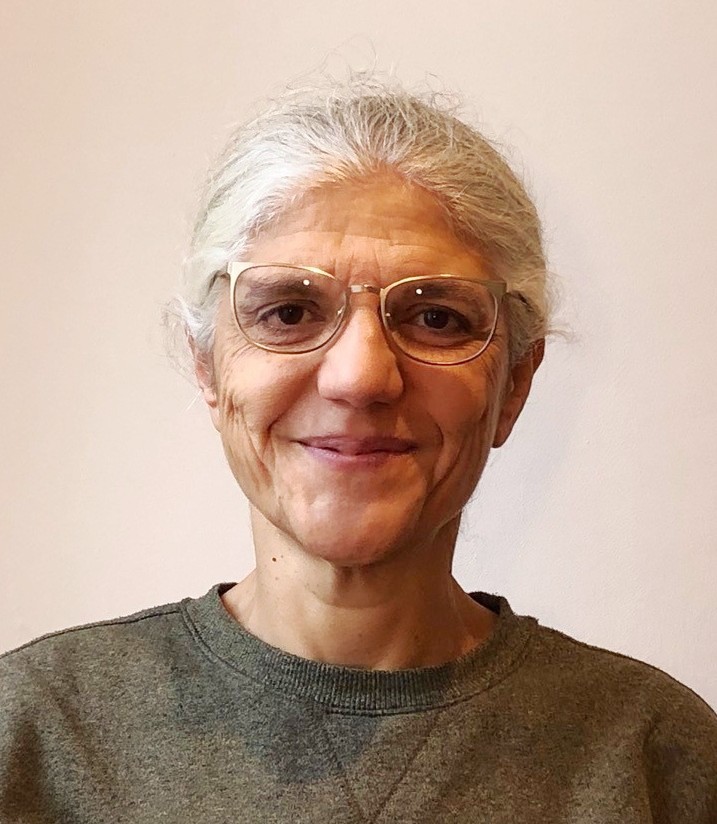
Samirah Kenawi – «Squaring the Money»
Past and future of a socio-ecological economy. Shaping a society without hierarchies between genders, peoples, and social classes.
Read more ...
Samirah Kenawi
Born and raised in East Germany in 1962, I witnessed the failure of a social order that aimed to eliminate exploitation. The collapse of socialism taught me that good intentions are not enough; a social utopia requires a sound economic foundation.
I have presented the results of my decades of extensive self-taught economics studies in my book “Squaring Money,” hoping that we can succeed in creating a society without hierarchies between genders, peoples, and social classes.
Past and Future of a Socio-Ecological Economy
1. Gender Order and Property
This section explores the transformation of gender order over the course of evolution and the emergence of possession and property as lifestyles changed.
2. History of Money
This section examines exchange systems and the origins of money, culminating in the development of credit money and the resulting social transformations.
3. Crisis Dynamics
The causes of the ongoing monetary crisis, as well as counter-strategies and their socio-ecological consequences, are presented.
4. Reform Proposal
Basic principles for a monetary system that can function without crises in the long term are introduced.
Spirituality – Forward with Roots
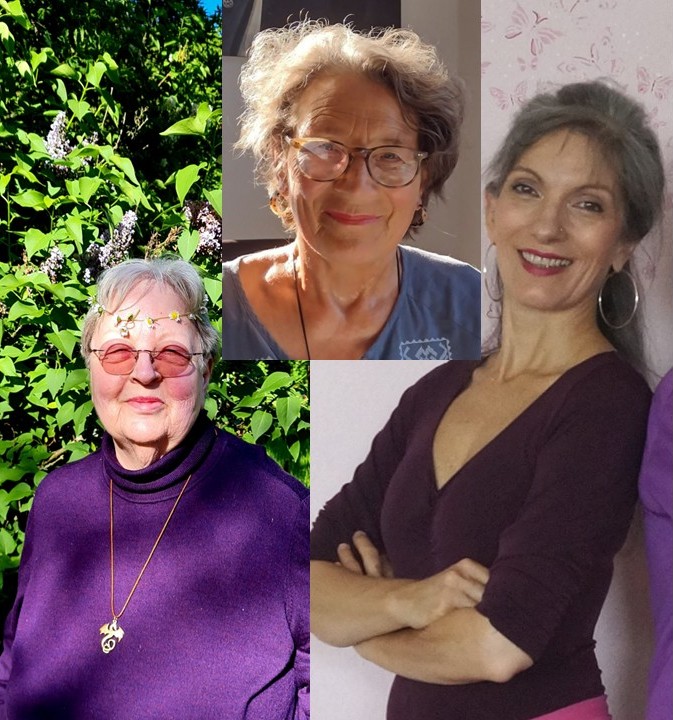
Annette Rath-Beckmann, Marion Lindemann and Ulrike Aicher – Mother Hulda
Mother Hulda is everything: the green forest; the most distant galaxy; the fragrant rose that blooms; the tsunami destroying the coast, the creative spirit in science.
Read more ...
Ulrike Aicher
Botanical expert, ritual practitioner, songwriter, singer
Marion Lindemann
Independent dancer, astrologer, ritual practitioner
Annette Rath-Beckmann
Historian, myth researcher, shamanic teacher
Frau Holle Returns Home: Workshop with lecture, discussion, storytelling, dance, and song
Frau Holle is everything: the green forest; the most distant galaxy; the fragrant rose that blooms; the tsunami that destroys the coast; the creative spirit in science; the hand that holds the dying woman.
The workshop combines the mythological background of the Frau Holle legend with artistic elements in its presentation. The three faces of the goddess are introduced in short lecture sequences, the corresponding myths are recounted, and they are presented and conveyed through scenic dance and song.
www.moorwelten-allgaeu.de
www.mondtanzmagie.de
www.udagan.de; www.goettin-holle.de
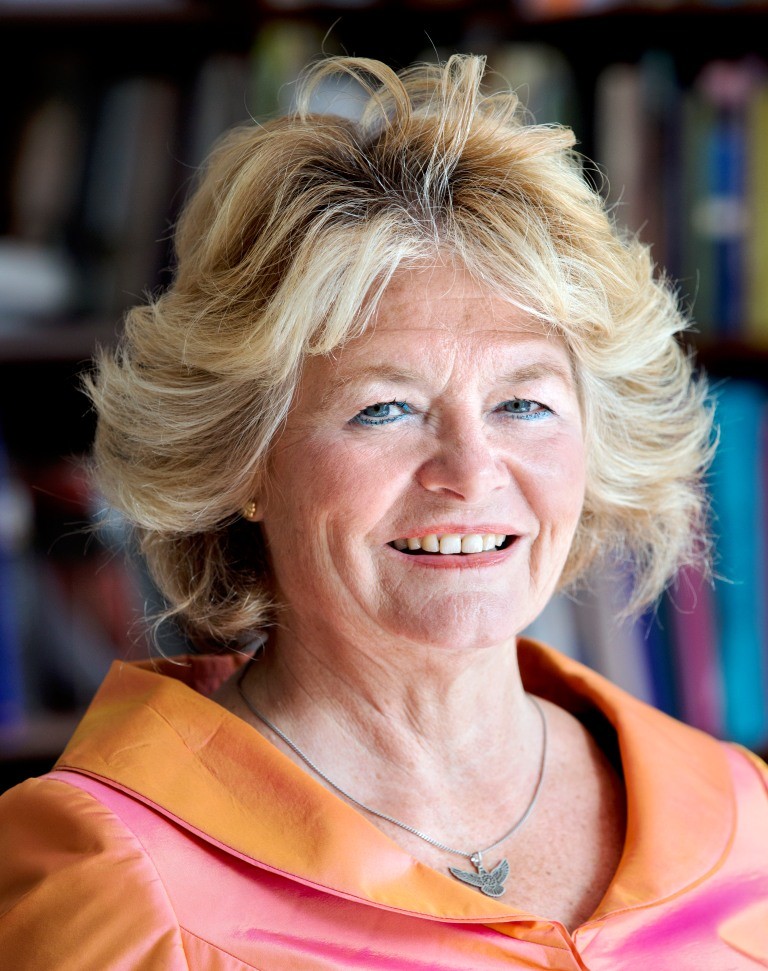
Annine van der Meer – Empower yourself with ancient sacred feminine energy
Remember the forgotten contribution of women to evolution and civilization. Experience how the global 13 body positions of our ancestresses and female leaders can empower 21first century women.
Read more ...
Dr Annine E.G. van der Meer (1953)
is a Dutch historian of religion and holds a PhD in theology from the University of Utrecht. She is the author of 20 books on the (divine) feminine in Dutch, English, French and German. She has travelled widely to retrace the lost language of the divine feminine in sacred art, symbols, texts and myths. In English she published on female figurines The Language of MA the primal mother. The evolution of the female image in 40,000 years of global Venus Art (2013) with 1300 images of ancient mothers, each provided with a number and description; the corresponding characteristics are linked to each other with numbers.
In 2008 she founded the Dutch PanSophia Academy, school of Wisdom, where she was active till 2018. In 2009 she joined the international matriarchy studies network. Since 2009 she has visited various international matriarchy- and gift economy conferences in Toronto (Canada, 2009), Hambach and Winzer (Germany, 2010), Rome (2009, 2015), and Sankt Gallen (Switzerland, 2011).
Empower yourself with ancient sacred feminine energy by embodying it.
It is an acknowledged fact that most of the prehistoric art that depicts humans depicts the powerful and sacred feminine. In this workshop I will first give a short introduction about the coherent global body language of ancient feminine leaders from prehistory till the Late Bronze Age, because people continued to mostly depict feminine figurines over very long periods of time. After this introduction we can conclude that all over the world ancient feminine leaders stand in the same 13 sacred positions of birthing, feeding, blessing and rebirthing humanity.
It is time for us to remember their power and wisdom. Therefor we will slowly and in a meditative way move into several of these sacred body positions. Why? We need to regain, internalize and remember the wisdom and knowledge of our ancestresses.
First, we will look at the images of our powerful ancestresses, who had central positions in ancient and some modern egalitarian societies. We will understand some of the secrets their body positions show and practice them.
Then they will touch our hearts when we slowly start to move into these ancestral body positions in utter concentration, silence and darkness. During these silent moments of embodying the sacred feminine we will listen to inspiring music that was recorded in the deep subterranean temple called The Hypogeum of Hal Saflieni on the island of Malta.
My personal experience: After having researched the global sacred language of our Primal Mother MA in several books I wanted to embody them myself. After practicing them at the end of lectures in smaller circles, I performed the global 13 sacral body positions with large audiences in the Convention Hall of the one and only Women’s University the world is rich: The Ewha University at Seoul in South-Korea in July 2016. Then a second time I presented them as keynote speaker at the Glastonbury Goddess Festival in August 2017 in an overcrowded Glastonbury Townhall.
My friends and I concluded that women from East to West were emotionally touched and sometimes even moved to tears by the sacral positions, a kind of yoga for females. Then I gave several embodying-workshops of one full day in my home country The Netherlands after which participants urged me to write a book about this which I did. This Dutch book is titled in English translation Empower yourself with Venuspower from 2019, 2024. It shows of each of the 13 body positions many photos and has 13 films that bring the movements into motion.

Astrid Walser – The secret, the power, and the knowledge of the pelvic bowl
Ancient women’s wisdom is the key to female spirituality, to sensing one’s own feminine power, and last but not least, to the perfect lunar cycle of the woman.
Read more ...
Astrid Walser
Adult educator, body, art, and creative therapist, artist, feminist
The Secret, Power, and Wisdom of the Pelvic Bowl
Ancient women’s wisdom is the key to feminine spirituality, to experiencing one’s own feminine power, and, not least, to the perfect lunar cycle of a woman.
We ask questions:
What does the pelvic bowl have to do with the Holy Grail?
What connection is there between the pelvic bowl and the Oracle of Delphi?
What are the connections between the ovarian and uterine menstrual cycles and the manifestations of the Goddess?
We sense and experience our own pelvic bowl, the vessel of wisdom and power, through:
- gentle physical exercises
- a short guided imagery exercise
- artistic expression with paper and paints.
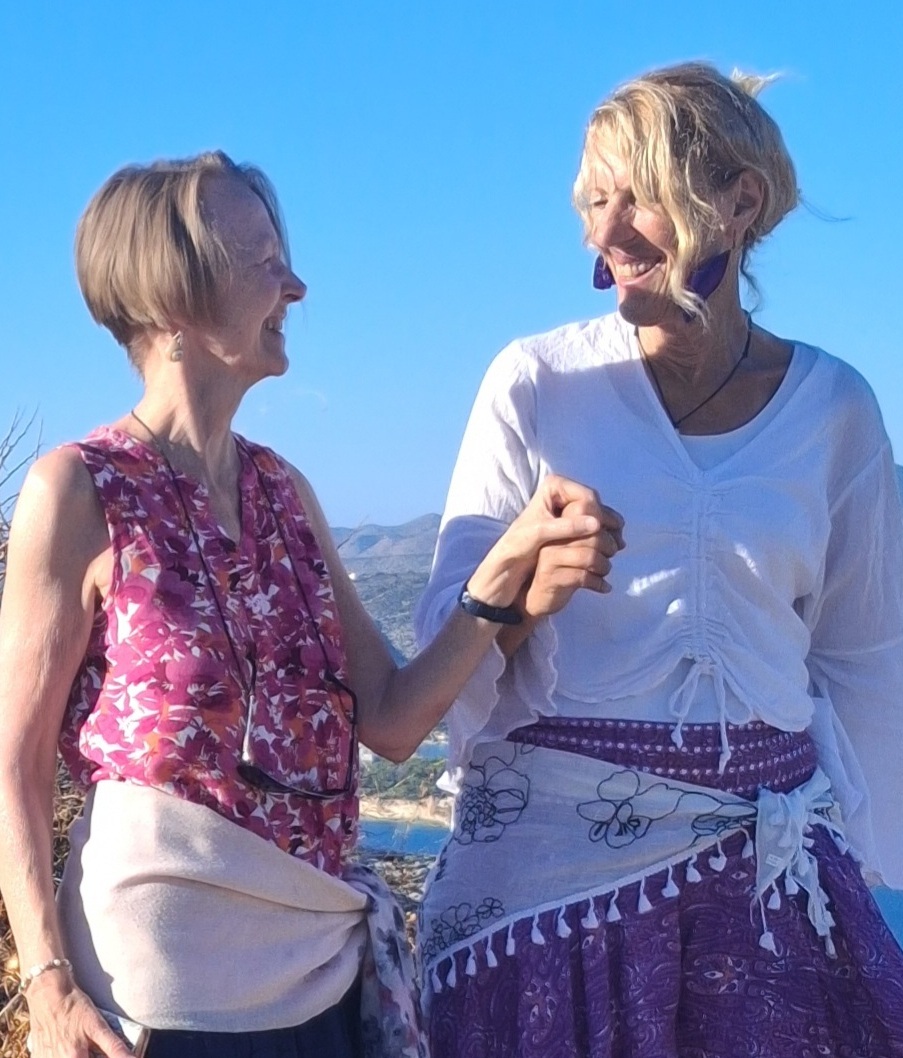
Maria-Luise Oberem and Claudia Welter – Spiral of Time
Women, Dance and Ritual in the Spiral of Time. By joining a circle dance we can find our matriarchal roots, tap into the wisdom of the ancient mothers and reconnect with our Cosmic Mother.
Read more ...
Maria-Luise Oberem, Ph.D.
is a US-trained psychologist and dance/movement psychotherapist of German origin, who has worked clinically for 15 years in San Francisco, New York City and Berlin. She has travelled widely and taught internationally in her field for 40 years, focusing on the female body and healing through the creative arts, dance and ritual. As a former dancer and long-time practitioner of Authentic Movement, she enjoys being a life-long mover and witness. She offers safe spaces for women, attending to the body as a source of wisdom and pathway to the Sacred.
As a former resident of California, she experienced the blossoming of women’s culture in the Bay Area of San Francisco which was a result of the Second Wave Feminism and the Women’s Spirituality Movement. This became a lasting influence on her life inspiring her ongoing interest in women’s history, mythology and goddess spirituality. A figurine given to her in California called her to visit Crete in 2015 for the first time. In awe of the beauty and grace of ancient Minoan culture of Bronze Age Crete, she has since returned many times. She is currently engaged in a reflective writing process about her spiritual journey from California to Crete
Claudia Welter
With an open heart, I have been guiding people through the healing power of circle dance for over 22 years, and since 2000, as a certified Qigong instructor (diploma from the Munich Adult Education Center), I have been leading them on their path to greater vitality, health, and inner peace. My roots are in Munich. For the past 18 years, I have lived on Crete – an island whose ancient culture, music, and deep connection to the earth inspire my work daily. Here, I combine the flowing wisdom of Qigong with the vibrant tradition of Greek and Balkan circle dances, as well as the spiritual wisdom dances of women.
My teachers Jiannis Korosidis, Petros Selkos, and Laura Shannon have shaped my dance journey and taught me to respect and share the cultural and spiritual depth of circle dances. I look forward to opening a circle with you at the matriarchal festival – a space filled with joy, mindfulness, and sisterhood.
Women, Dance and Ritual in the Spiral of Time
This is a two-part seminar: the first part will be a lecture given by Maria-Luise, in the second part Claudia offers women’s ritual circle dancing.
Through dance we exist, through dance we will overcome (Germaine Acogny)
In this seminar we shall trace the spiritual roots of dance in relation to ceremony and ritual, highlighting the prominent role women played in this realm. We will focus on more recent developments of women’s ritual and circle dancing with its inherent matriarchal values.
Dance is the oldest and most elemental form of human expression. People have danced since the beginning of time, by expressing themselves in rhythmic movement. They arise naturally and organically from within the body. Dance and bodily movement are our native mother tongue. We have rich evidence from the dawn of agriculture, in early pre-historic art, depicting women in dance in great variations, covering a vast geographical area, from the Levante, Mesopotamia, Iran, Anatolia, the Balkans, Greece to Africa.
Dance is considered the mother of all the arts. Our early ancestors observed the movement of the planets and danced to keep the world in harmonious balance. Their dances mirrored the movement of the stars in the sky. With their human bodies, they followed the pathways of the celestial bodies; dancing they transferred the cosmic patterns from above with their footsteps onto the earth. In this way, they supported the cosmic order and made sure the world would not fall apart; this is what they called Magic.
Today we still come together and dance. Dance has multiple gifts to offer. In recent years we have noticed a heightened interest in circle and round dances, often in honour of the natural cycles of the seasons and in celebration of our own life cycles. In these ways we can experience the healing and transformative power of dance. Circle dancing draws people together through shared experience. It enlivens body and spirit and offers the benefit of creating peaceful communities.
Dance is inspiration, education, and communication. It invites us to commune with the elements of nature and with the Divine. Dance allows us to harmonize body, mind and soul. Through dancing we can ground spirit in body and experience the Sacred.
Dance allows the soul to speak through the body in movement. This in itself can be healing as it balances one’s physical and psychic well-being. Being witnessed and held in a circle of movers can enhance this experience. This is how the modern profession of dance/movement therapy has emerged during the 1960’s. The field was created entirely by women, the majority were former dancers, who knew about the communicative and healing power of dance. Initially, they offered “social dance circles” for hospitalized psychiatric patients, many of whom were war-traumatized soldiers. In a dance circle, people can feel held, seen and supported. Today, dance /movement therapy is widely used in health care settings, in groups and with individuals.
By joining a circle dance we can find our matriarchal roots, tap into the wisdom of the ancient mothers and reconnect with our Cosmic Mother.
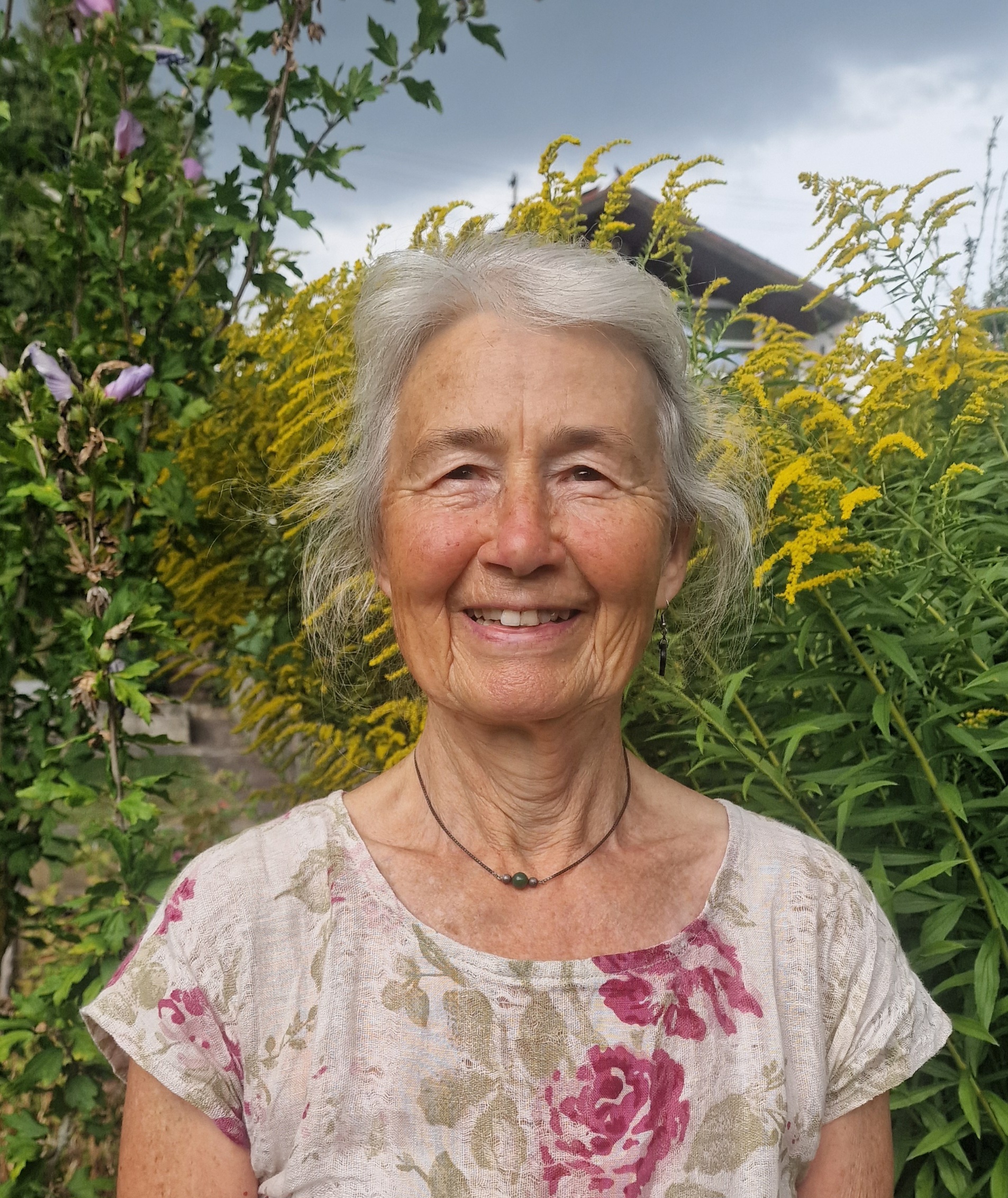
Regina Golke – Sontga Magriata, a Rhaetian song from the Swiss Alps
The ancient Margaret song, handed down in the Rhaetian language, leads us to an alpine pasture near the Kunkel Pass in Graubünden.
Read more ...
Regina Golke
30 years of leading prehistoric and legendary hiking seminars, guided tours in museums and exhibitions, lectures and workshops on archaeological topics.
Decades ago, inspired by Heide Göttner-Abendroth, I embarked on a search for matriarchal traces in my homeland and beyond.
Article writer for Spinnennetz and Matriaval. Contributor to a film in the series “From the Goddess” by Laura Hirch.
Special education teacher, transactional analyst practitioner, integration specialist, and initiator of the Leinfelden-Echterdingen Prostitution Working Group, ritual leader.
Extensive, long-term continuing education in archaeology, personal development, and spirituality, e.g., “The Way of the Wise Woman.”
Sontga Magriata, a Rhaetian song from the Swiss Alps
The ancient Margaret Song, handed down in the Rhaetian language, takes us to an alpine pasture near the Kunkel Pass in Graubünden. Legend has it that a powerful woman, disguised as a dairyman, used to produce milk and cheese from the cows entrusted to her care. When her true identity was discovered, she turned her back on her ancestral home. With her disappearance, the fertile springs dried up, and the once-flourishing land withered.
To deepen your understanding of the story, I invite you to join in some meditative singing.
Who was this woman who had to conceal her true identity? Who was Magriata, who left her home when she was recognized? Who was she whose departure triggered a natural catastrophe? I will explore these questions and leave room for reflection on how each of us can show and practice respect, goodwill, and care for Mother Earth to preserve her fertile diversity.
